Katie's Learning Lab
Awareness is one step to freedom and exceptional personal and professional functioning.
Start here: a peek into the Enneagram Personality System, all 27 subtypes, and the skill Katie's clients use every day.
Hover a number to see the two types it connects to · click one for a short definition
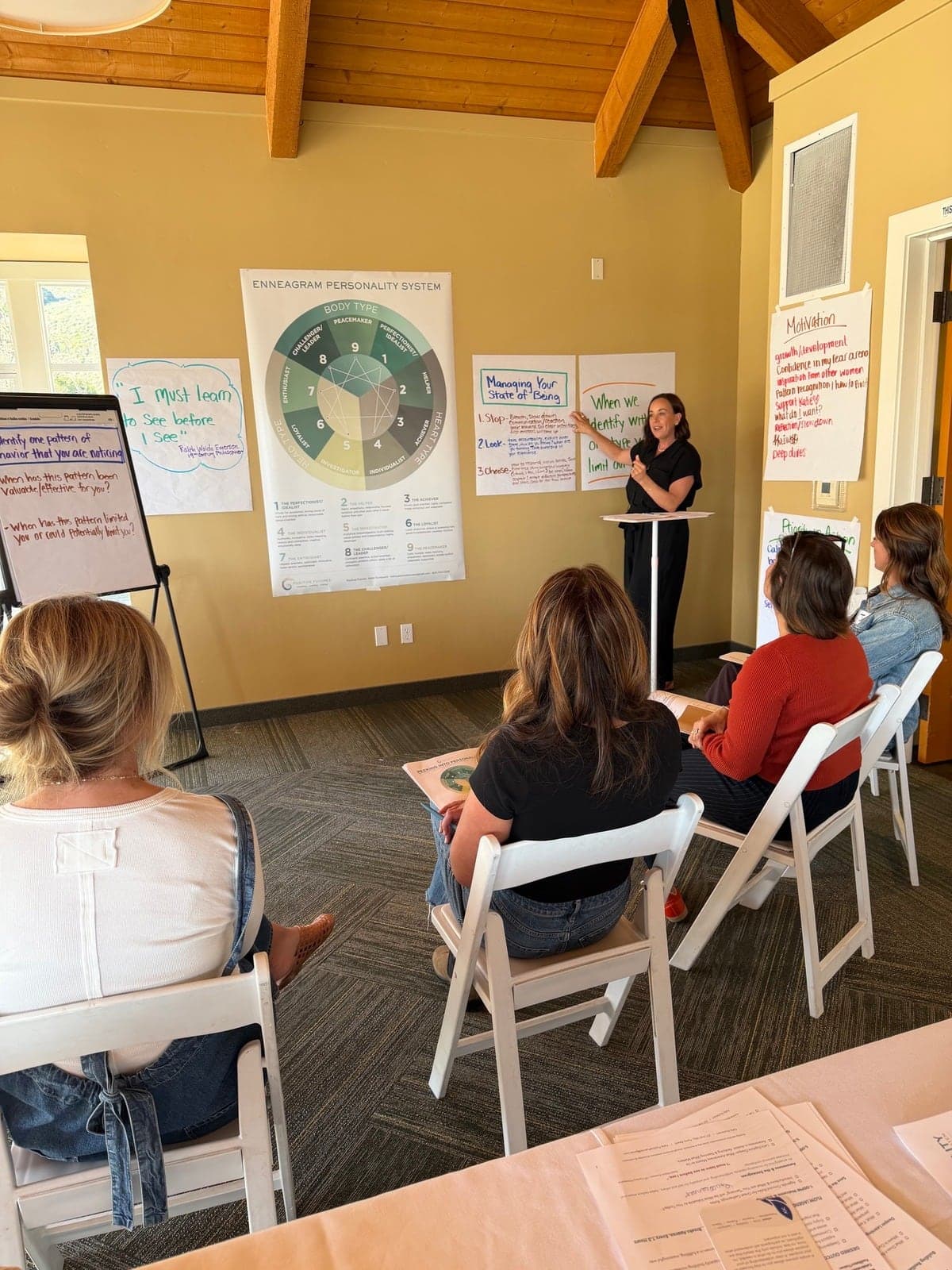
Peeking into personality
A deeper introduction to the Enneagram Personality System
What happens when we are able to notice patterns of behavior in ourselves and others? We begin to experience more freedom, resilience, self-compassion, and a faster path to meeting our deepest goals and desires.
Studying the Enneagram unveils our true self, and offers a pathway to living a life in alignment with it. Nine personality types, three centers of intelligence, and twenty-seven subtypes: a map of the loyal patterns that run us until we learn to see them.
The 3 centers of intelligence
How we perceive, process, and express.
Our centers of intelligence are how we find safety and connection in the world. We operates out of a dominant center, although we have access to all of them.
Body Center
The instinctual function
Tends to experience life chiefly through the senses and gut knowing.
Heart Center
The feeling function
Expresses self and experiences life chiefly through emotions.
Head Center
The thinking function
Experiences and expresses life chiefly through thoughts, beliefs, and cognitive activity.
Going deeper
The three instincts and 27 subtypes
“Until we self-observe, we cannot self-correct.”
Each Enneagram type shows up three different ways depending on which instinct dominates.
Self-Preservation
security · safety · resources
Focuses attention and behavior around survival and material security: having enough resources, avoiding danger, and maintaining a basic sense of structure and well-being in the world.
Social
belonging · role · positioning
Focuses on belonging, recognition, and relationships in groups: being included and recognized in a community, and awareness of the power structure.
One-on-One
intensity · connection · bonding
Focuses on the quality and status of relationships with specific individuals, directing energy toward achieving and maintaining relationships with important others.
The nine types & 27 subtypes
The nine personality types, each with its three subtypes
Not a box, a starting point. Which patterns feel most familiar? Under each type are its self-preservation (SP), social (SO) and one-on-one (SX) versions; the countertype is the one that looks least like the type's usual description.
Body center
Type 1: The Perfectionist / Idealist
- Clear understanding of right and wrong
- Easily spots errors; strong attention to detail
- Ethical, responsible, strives for excellence
- Can be hard on self, and sometimes others
The three subtypes
- SPAnxiety / Perfection countertype
Inner tension; strives to be correct to feel secure - SONon-adaptability
Focused on being right, improving systems and others - SXZeal
Intense, passionate drive to improve others
Heart center
Type 2: The Helper
- Puts a high value on relationships
- Warm, friendly, empathetic and optimistic
- Diplomatic and skilled in their delivery
- Can forget or deny their own needs in service of others
The three subtypes
- SPPrivilege countertype
Seeks care indirectly; may appear more childlike or self-protective - SOAmbition
Gains value through helping and connecting with groups - SXSeduction
Builds closeness through intensity, charm, and personal attention
Heart center
Type 3: The Achiever
- Competent, driven, quick to move into action
- Values achievement, acknowledgment and success
- Image-conscious; cares what others think
- Has a hard time slowing down
The three subtypes
- SPSecurity countertype
Hardworking; focused on doing rather than image - SOPrestige
Image-conscious; success tied to recognition and status - SXCharisma
Adapts to be attractive and impressive in relationships
Heart center
Type 4: The Individualist
- Values being authentic
- Large capacity for emotional sensitivity and depth
- Intuitive & empathic; sees meaning and beauty in most things
- Creative, innovative and artistic
The three subtypes
- SPTenacity countertype
Endures difficulty quietly; strong and resilient - SOShame
Expresses feelings of difference or deficiency - SXCompetition
Intense; compares and strives to overcome others
Head center
Type 5: The Investigator
- High value on knowledge; seekers of the truth
- Intellectual, observant and analytical
- High priority on privacy, independence and control of their time
- More of an observer than a participant
The three subtypes
- SPCastle
Withdrawn; protects energy and resources - SOTotem
Shares knowledge to connect within groups - SXConfidence countertype
Seeks deep connection with select people
Head center
Type 6: The Loyalist
- Need for safety and security; assesses risk fast
- Skilled at troubleshooting, planning, organizing; calm in a crisis
- Skeptical of authority at first; deeply loyal once trust is earned
- Can doubt and procrastinate when decisions loom
The three subtypes
- SPWarmth
Friendly; seeks security through relationships - SODuty
Responsible; loyal to systems and authority - SXStrength countertype
Confronts fear directly; appears bold or aggressive
Head center
Type 7: The Enthusiast
- Upbeat, friendly, energetic, optimistic
- Prefers many options and possibilities in life
- Spontaneous, fun and fast-paced; reframes negatives into positives
- Tends to avoid hard realities and darker feelings
The three subtypes
- SPKeepers of the Castle
Strategic; plans for security and resources - SOSacrifice countertype
Idealistic, service-oriented, less self-focused - SXSuggestibility
Imaginative; seeks exciting and stimulating connections
Body center
Type 8: The Challenger / Leader
- Influential, powerful and assertive
- Confident taking on big challenges; makes things happen
- Direct, tells their truth, communicates clearly
- Protects others and stands up for the underdog
The three subtypes
- SPSurvival
Focus on independence, protection, and material control - SOSolidarity countertype
Protective of others, justice-oriented; appears more relational - SXPossession
Intense, direct; seeks control and strong connection
Body center
Type 9: The Peacemaker
- Likeable, calm and humble
- Values harmony and going with the flow
- Empathetic; sees many sides of any situation; a natural mediator
- Can lose sight of their own needs and wants
The three subtypes
- SPAppetite
Comfort-seeking, routines, merging with environment - SOParticipation
Goes along to belong; supports group harmony - SXFusion countertype
Merges deeply in relationships; loses self in connection
Adapted from & key resource: The Enneagram Guide to Waking Up: Find Your Path, Face Your Shadow, Discover Your True Self by Beatrice Chestnut PhD & Uranio Paes MM. Want the printable handouts for your team or workshop? Send Katie a message.
Stop. Look. Choose.
How to self-manage in any situation. The pause before reacting is where choice and true freedom lives.
Stop.
Pause before you react. Notice the familiar pull of your pattern, the “default” your type knows how to do so well.
Look.
Check in on your inner state of being. What's the story you're telling yourself? How has this pattern protected or served you?
Choose.
Accept things as they are. Only then can you make a choice for yourself. How else could you respond? Practice it. Integrate it.
 the Enneagram, live
“Find out who you are and do it on purpose.”
Enneagram basics
The Enneagram, in short.
- What is the Enneagram?
A personality system that describes nine core types, each with its own way of perceiving the world and a loyal set of patterns. Studying it builds self-awareness, compassion and the freedom to respond rather than react.
- What are the three centers of intelligence?
Body, Heart and Head. Types 8, 9 and 1 lead with the body and gut knowing; types 2, 3 and 4 with the heart and feeling; types 5, 6 and 7 with the head and thinking. Everyone has access to all three but operates mostly from one.
- What is an Enneagram subtype?
Each type shows up three ways depending on which instinct dominates: self-preservation, social or one-on-one. That makes 27 subtypes. The countertype is the version that looks least like the type's usual description.
- What is Stop, Look, Choose?
A self-management skill for any situation. Stop before you react. Look at the story you are telling yourself and what the pattern has protected. Then accept what is and choose how to respond. Practice it until it is yours.
- Which Enneagram type am I?
You find out by studying the nine types and noticing which patterns feel most familiar, ideally with a guide rather than a quiz. Katie offers an Enneagram personality assessment and consultation for individuals, and a complimentary 30-minute Peek into Personality for groups.
- Can I get the printable handouts?
Yes. Send Katie a message and she will share the Peeking into Personality and subtypes handouts for your team or workshop.
“Today helped me see that we are all craving connection and acceptance. I want to tap into the other traits of my Enneagram type.”
Are you ready?
Curious? To schedule an Enneagram personality assessment, a private development consultation, a complimentary 30-minute Peek into Personality for your group, or just to ask questions, reach out.